

Budget-Friendly Unconventional Ways Freelancers Are Making $10K/Month
Hitting five figures a month as a freelancer doesn’t require a massive upfront investment or expensive tools. While many assume you need premium software subscriptions, paid advertising budgets, or costly training programs to reach $10,000 monthly, the reality is quite different. This list focuses on unconventional income strategies that prioritize low costs and high returns. If you’re price-conscious and want to build a profitable freelance business without breaking the bank, these approaches will show you exactly how to get there.
- Sell Ready-Made Services on Legiit
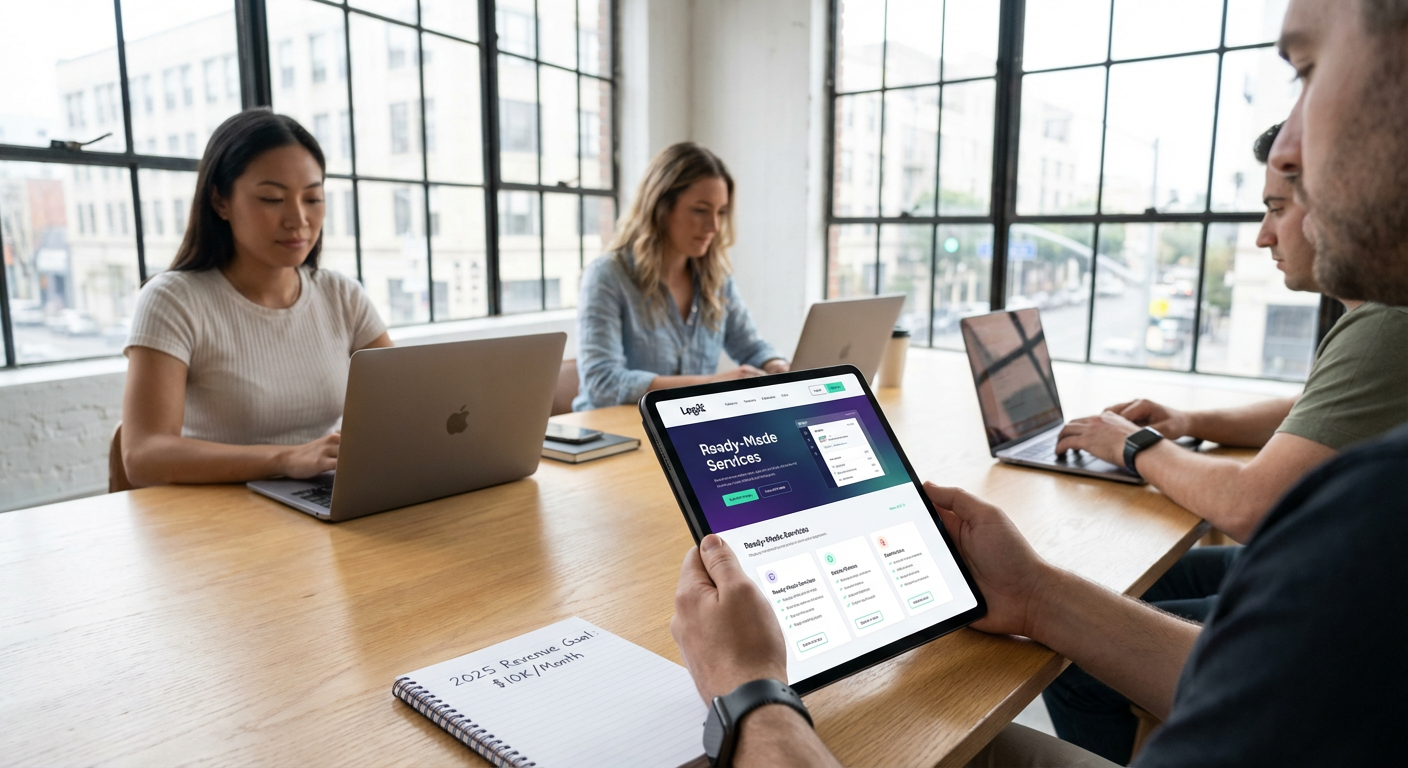
Legiit offers freelancers a platform to sell pre-packaged services without the overhead costs of building your own website or running paid ads. Instead of pitching clients one by one, you create service listings that customers can purchase directly. The platform handles payment processing and provides built-in traffic from buyers actively searching for services.
What makes this particularly budget-friendly is the low barrier to entry. You can start with free listings and only pay a commission when you make a sale, which means zero upfront costs. Many freelancers bundle their expertise into fixed-price packages like content writing bundles, website audits, or social media management starter packs. This model lets you scale income predictably since you know exactly what you’ll earn per sale and can calculate how many sales you need to hit $10,000 monthly.
- Flip Free Government Data Into Premium Reports

Government agencies release massive amounts of valuable data for free, from census information to industry reports and economic forecasts. Smart freelancers are downloading this public data, analyzing it for specific industries, and repackaging it into focused reports that businesses will pay hundreds or thousands of dollars for.
The beauty of this approach is that your raw material costs nothing. A freelancer might take housing market data, combine it with local economic indicators, and create a quarterly real estate investment report for property investors. Another might analyze FDA approval data to create pharmaceutical pipeline reports for healthcare investors. The key is finding data that’s freely available but time-consuming to interpret, then doing that interpretation work for clients who value their time more than the report cost. With minimal expenses beyond your time, profit margins stay exceptionally high.
- Offer Async Video Consulting Through Free Tools
Traditional consulting often requires scheduling calls, which limits how many clients you can serve. Asynchronous video consulting flips this model by having clients submit questions via form, then you record personalized video responses using free tools like Loom or OBS Studio.
This method requires virtually no investment since recording and sharing tools are free. A business strategist might charge $200 for a 15-minute personalized video analysis of a client’s business challenge. A fitness coach could offer form checks where clients submit workout videos and receive detailed feedback videos in return. You can serve clients across time zones without scheduling headaches, and because you’re selling your expertise rather than your real-time availability, you can batch-record responses during your most productive hours. Some freelancers are handling 50+ clients monthly this way, each paying $150 to $300 for video consultations that take 10 to 20 minutes to produce.
- Create Niche Swipe Files and Charge Access Fees
A swipe file is a curated collection of examples in a specific category. Freelancers are building these collections in narrow niches and charging monthly or one-time access fees. The initial investment is mostly time spent collecting and organizing examples that already exist publicly.
For instance, a copywriter might compile 500 high-converting email subject lines from successful e-commerce brands, organize them by category and conversion goal, then charge marketers $47 for lifetime access. A designer could create a swipe file of 300 landing page designs from SaaS companies, categorized by industry and conversion element. The content already exists online, but the value lies in curation, organization, and saving clients dozens of research hours. Once created, swipe files require minimal maintenance but can sell repeatedly. Freelancers running multiple niche swipe files often see $8,000 to $15,000 monthly from this largely passive income stream, with hosting costs under $20 monthly.
- Become a Notion Template Reseller
Notion templates have exploded in popularity, and freelancers are earning serious income by creating and selling them. The platform itself is free, and you can build complex templates without any coding knowledge or design software purchases.
Successful template creators identify specific pain points in business workflows and build solutions. A project manager might create a client onboarding template system that agencies can duplicate and customize, selling it for $79. A content creator could build a complete content calendar system with integrated task management for $49. The profit margins are nearly 100% since Notion is free and distribution platforms like Gumroad charge only a small percentage per sale. Some template creators generate $12,000 to $20,000 monthly by building a portfolio of 10 to 15 templates that each sell consistently. The key is solving very specific problems for defined audiences rather than creating generic productivity templates.
- Run Cold Email Campaigns Using Free Tier Tools
While many freelancers avoid outbound marketing thinking it requires expensive tools, you can run effective cold email campaigns using free email accounts and manual research. This approach trades money for time, making it perfect for budget-conscious freelancers.
The strategy involves identifying your ideal clients, finding their contact information through free tools like LinkedIn and company websites, then sending personalized outreach emails. A web developer might target local restaurants without online ordering systems, offering a specific solution. A bookkeeper could reach out to new LLCs registered in their state, which is public information. The investment is zero beyond your internet connection and the hours spent researching and writing emails. Freelancers using this method report closing one to three clients monthly from 100 to 150 personalized emails, with each client worth $2,000 to $5,000 in project value. That’s potentially $10,000+ monthly without spending a dollar on tools or advertising.
- Offer Done-For-You Podcast Editing Packages
Podcasting continues growing, but most podcasters hate the editing process. Freelancers are capitalizing on this by offering complete podcast editing packages using free software like Audacity or open-source tools, keeping overhead costs minimal.
The service typically includes removing filler words, balancing audio levels, adding intro and outro music, and exporting in multiple formats. Podcasters will pay $75 to $200 per episode for this service, and an experienced editor can process a one-hour episode in 90 minutes to two hours once they’ve developed efficient workflows. By taking on 10 to 15 podcasts with weekly episodes, you can easily clear $10,000 monthly. The initial learning curve exists, but countless free YouTube tutorials teach professional editing techniques. Some editors expand into show notes writing and audiogram creation using free tools like Canva, adding extra revenue per client without adding software costs.
- Curate and Resell PLR Content Bundles
Private Label Rights content allows you to purchase articles, ebooks, and courses that you can rebrand and resell as your own. Smart freelancers buy bulk PLR content at low prices, curate the best pieces around specific themes, improve the quality, then resell these bundles at much higher prices.
You might spend $50 on a PLR pack containing 100 articles about personal finance. After reading through, you select the 25 best articles, edit them for clarity and accuracy, organize them into a cohesive guide about retirement planning for millennials, design a simple cover using Canva’s free version, then sell this curated guide for $27. Since PLR allows unlimited resales, you can sell the same bundle repeatedly. The profit margin after the initial purchase and editing time is substantial. Freelancers operating in multiple niches with different curated bundles report $6,000 to $12,000 monthly, with content acquisition costs typically under $300 monthly. The value you add through curation, editing, and packaging justifies the higher price point.
Reaching $10,000 monthly as a freelancer is absolutely achievable without draining your savings on tools, courses, or advertising. These unconventional methods prove that creativity and strategic thinking matter more than budget size. Whether you’re repackaging free data, offering services on established platforms, or creating digital products with free tools, the path to five figures focuses on delivering value rather than spending money. Start with one approach that matches your skills and available time, keep your costs low, and reinvest profits as you grow. The freelancers making serious money aren’t necessarily the ones with the biggest budgets, but rather those who see opportunities others miss and execute consistently.