

12 Practical Steps to Build a Niche Community That Pays (Without Ads)
Building a community that generates real income without relying on ads is more achievable than most people think. The key is understanding that monetization comes from value, not traffic volume. This guide walks you through concrete, actionable steps you can implement right away to create a paying community around your niche. Whether you’re starting from scratch or looking to monetize an existing audience, these practical tips will help you build something sustainable and profitable.
- Start With a Freelance Services Marketplace Like Legiit

One of the fastest ways to build a paying community is by connecting your members with services they actually need. Legiit is a freelance marketplace that lets you offer digital services to your community while earning income from transactions. You can position yourself as the go-to resource for quality providers in your niche, whether that’s content writing, design, SEO, or coaching.
The practical advantage here is that you’re solving real problems for your members while building authority. Set up a seller profile, offer services that match your community’s needs, and promote it naturally within your content. Your community members get vetted service providers, and you generate income without a single ad. This approach works especially well when you already understand the pain points your niche faces.
- Create a Paid Membership With Tiered Access
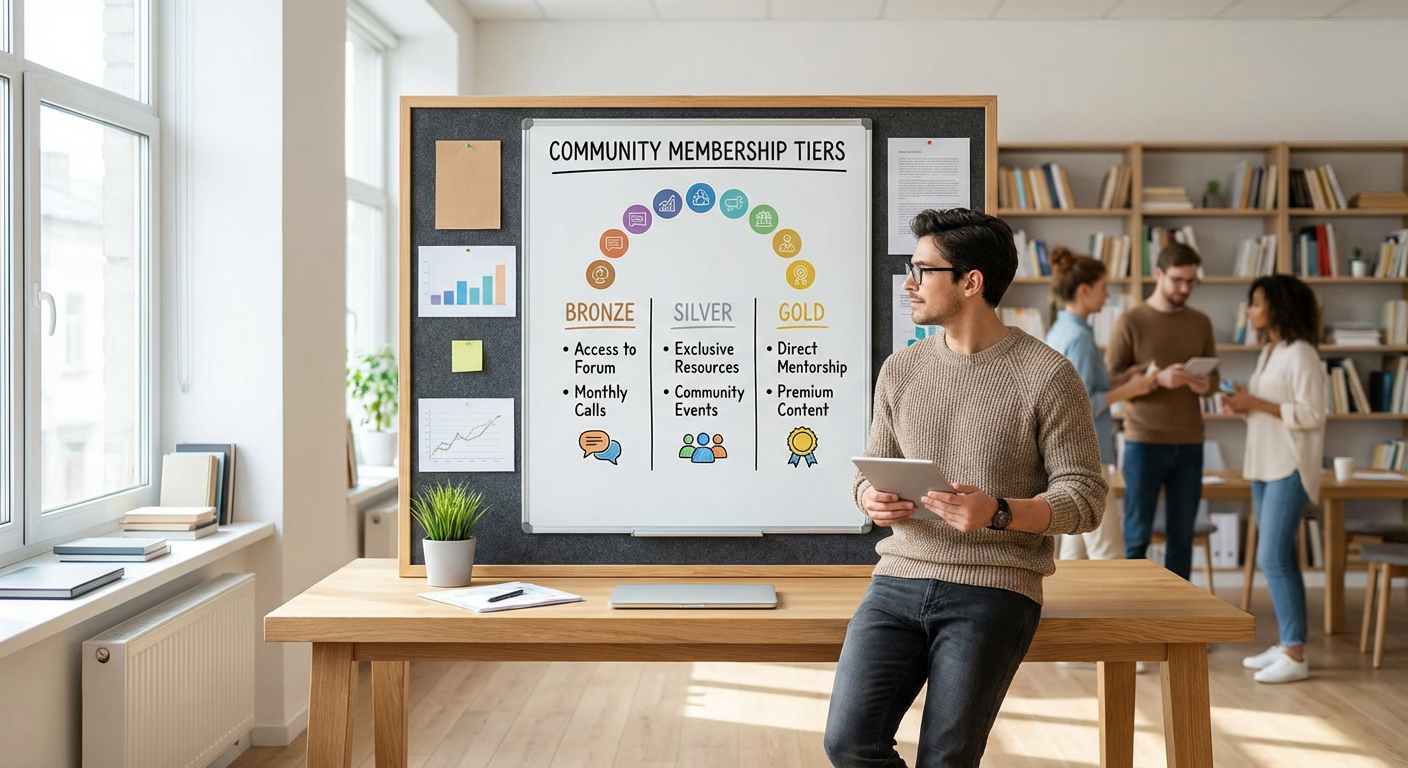
Structure your community with clear membership tiers that offer increasing value at each level. Start with a free tier to build your base, then create paid tiers at $10, $25, and $50 per month that unlock specific benefits. The free tier gives people a taste, while paid members get exclusive content, direct access to you, or advanced resources.
The key is making the paid benefits tangible and immediate. If you run a fitness community, paid members might get personalized workout reviews or weekly Q&A sessions. For a writing community, they might receive detailed feedback on their work. Price your tiers based on the time you invest and the transformation you provide. Test different price points with small groups before rolling them out widely.
- Sell Digital Products Your Community Actually Requests
Listen to what your community members ask for repeatedly, then create digital products that answer those requests. If people keep asking how to do something specific, that’s your signal to build a guide, template, or course around it. This approach guarantees demand before you invest time creating.
Start small with a single PDF guide or template pack priced between $20 and $50. Promote it by sharing a free sample or case study showing the results it delivers. As you get feedback, expand your product line with more comprehensive offerings. The most successful community builders create products that save their members time or help them make money, because those benefits justify the purchase immediately.
- Run Paid Workshops and Live Training Sessions
Host live workshops where you teach a specific skill or walk through a process step by step. Charge between $50 and $200 per attendee depending on the depth and duration of your training. Live sessions create urgency and allow for real-time interaction, which people value far more than pre-recorded content.
Promote your workshops two to three weeks in advance and cap attendance at a manageable number like 20 or 30 people. This scarcity increases perceived value and ensures you can give personalized attention. Record the sessions and offer them as bonus content to your paid members, creating additional value for your membership tier. The combination of live teaching and recorded resources turns a single workshop into multiple revenue streams.
- Offer One-on-One Consulting or Coaching Packages
Position yourself as an expert who can help community members solve specific problems through direct coaching. Create packages that bundle multiple sessions together, like four one-hour calls for $500 or a three-month coaching program for $1,500. Package pricing encourages commitment and generates more revenue per client.
Make booking simple by using scheduling software that handles payments and calendar management automatically. Promote your coaching by sharing case studies and testimonials from previous clients within your community. Focus your coaching on measurable outcomes rather than vague improvement. When people see others getting real results, they become far more willing to invest in working with you directly.
- Build an Affiliate Program Around Tools Your Community Uses
Identify the software, tools, and services your community members already use or should be using, then join those affiliate programs. Share honest recommendations based on your actual experience, and include your affiliate links naturally in helpful content. This works because you’re recommending things people genuinely need, not pushing products for commission.
Create comparison guides, tutorial videos, or setup walkthroughs that demonstrate how to use these tools effectively. Your affiliate income grows as your community grows, without requiring you to create new products. Track which recommendations convert best and double down on those. The key is maintaining trust by only promoting things you actually use and believe in, even if that means fewer commissions in the short term.
- Launch a Private Podcast or Newsletter for Paying Subscribers
Create premium content delivered through a private podcast feed or paid newsletter that goes deeper than your public content. Charge $10 to $20 per month for access to weekly episodes or issues that provide insider information, detailed analysis, or exclusive interviews. This model works well because it’s easy to produce consistently and scales without much additional effort.
Use platforms like Patreon or Substack that handle payments and content delivery automatically. Promote your premium content by sharing excerpts or previews in your free channels. The subscribers who join are typically your most engaged community members, and they often become advocates who help grow your community organically. Consistency matters more than production quality in the beginning, so focus on delivering value every week rather than perfecting your setup.
- Organize Paid Mastermind Groups With Small Cohorts
Facilitate small group mastermind sessions where 5 to 10 community members meet regularly to share challenges and solutions. Charge each participant $100 to $300 per month to be part of the group. Your role is to moderate discussions, keep people accountable, and occasionally provide expert input.
Mastermind groups work because participants get value from each other, not just from you. This makes them easier to run than one-on-one coaching while still commanding premium prices. Set clear expectations about participation and commitment upfront. Run your first mastermind group at a discounted rate to gather testimonials, then increase your prices as demand grows. The peer accountability and diverse perspectives make these groups particularly valuable for entrepreneurs and professionals.
- Create and Sell Community-Specific Templates or Resources
Develop templates, checklists, or resource libraries that solve common problems in your niche. If you serve real estate agents, create listing templates and marketing checklists. For designers, offer client contract templates and pricing calculators. Price these resources between $15 and $75 depending on their complexity and the time they save.
The advantage of templates is that you create them once and sell them repeatedly with minimal updates. Bundle related templates together to increase the perceived value and justify higher prices. Ask your community what tasks they find tedious or confusing, then create templates that eliminate that friction. Promote your templates by giving away one basic version for free, which demonstrates the quality and creates demand for your more comprehensive paid versions.
- Host Paid Virtual Summits or Multi-Day Events
Organize a virtual summit where you bring in several experts to speak on topics your community cares about. Charge $50 to $150 for access to the live event and recordings. You can negotiate with speakers to participate in exchange for exposure, or offer them a percentage of ticket sales if they help promote.
Virtual summits work well because they provide concentrated value over a short period and create a sense of occasion. Promote the event six to eight weeks in advance and use early bird pricing to drive initial sales. The recordings become a digital product you can sell long after the live event ends. Even a small summit with 100 attendees at $100 each generates $10,000 in revenue, and you build relationships with other experts in your field at the same time.
- Sell Certification or Badge Programs to Add Credentials
Develop a certification program that recognizes members who complete certain training or demonstrate specific skills. Charge $200 to $500 for the certification process, which includes coursework, assignments, and a final assessment. People pay for credentials they can display professionally, especially if your community is respected in your niche.
Make the certification rigorous enough to be meaningful but achievable for dedicated members. Provide digital badges and certificates that people can add to their LinkedIn profiles or websites. Promote the success stories of certified members to show how the credential has helped them professionally. As your community grows and your reputation strengthens, your certification becomes more valuable, allowing you to increase prices and attract more serious participants.
- Offer Done-for-You Services Based on Community Needs
Take the most common tasks or challenges your community faces and offer to do them as a service. If you run a podcasting community, offer editing and production services. For a marketing community, provide campaign setup or content creation. Price these services based on the time involved and the value delivered, typically starting at a few hundred dollars.
This approach turns your expertise into direct income while helping members who lack time or skills to do things themselves. Start by offering services to a few beta clients at a discounted rate to refine your process and gather testimonials. As demand grows, you can hire help or create a small agency model. The key is focusing on services with clear deliverables and outcomes, so clients know exactly what they’re getting and you can deliver consistently.
Building a community that pays without ads comes down to providing real value and asking for fair compensation. Each of these strategies works because it solves a genuine problem or fulfills a real need within your niche. Start with one or two approaches that match your strengths and your community’s needs, then expand as you gain confidence. The communities that thrive financially are those that focus on serving their members first and monetization second. Take action on one of these steps this week, and you’ll be surprised how quickly a paying community begins to form around you.